The Case for Private AI: Why Data Sovereignty Matters More Than Ever
 By Solaeris · 13 min read
As AI becomes essential to modern business, organizations must confront an important question: Who ultimately controls the proprietary information that makes their business valuable?
Artificial intelligence is transforming how organizations operate. From legal research and medical diagnostics to pharmaceutical development and advanced engineering, AI models are becoming extraordinarily capable tools for analyzing information, accelerating research, and automating complex knowledge work.
But for organizations built around confidential information, intellectual property, and proprietary expertise, the adoption of AI introduces a new category of risk.
What happens when your organization’s most valuable information is shared with an AI provider that may eventually become your competitor?
For law firms, healthcare organizations, defense contractors, biotechnology companies, pharmaceutical researchers, and technology businesses developing proprietary inventions, this question deserves serious consideration.
The answer may lie in an increasingly important approach to enterprise AI: private AI systems that give organizations greater control over their data, infrastructure, and intellectual property.
The Hidden Trade-Off of Public AI
The simplest way for an organization to adopt AI is to use a commercial service such as OpenAI’s ChatGPT, Anthropic’s Claude, Google’s Gemini, or Microsoft Copilot.
These services provide access to some of the world’s most advanced foundation models without requiring organizations to operate their own computing infrastructure.
However, the convenience comes with trade-offs.
When employees submit contracts, research documents, source code, financial statements, patient records, or proprietary technical information to a cloud-based AI service, that information is transmitted to infrastructure operated by another company.
What happens to it depends on the provider, subscription tier, contractual protections, and specific AI features being used.
Some consumer AI services permit submitted information to be used for model improvement and training, depending on the user’s privacy settings. Commercial and enterprise offerings generally provide substantially stronger protections.
For example, OpenAI states that ChatGPT Business, Enterprise, and API customer data is not used to train its models by default. Anthropic makes a comparable commitment for its commercial offerings. Google Workspace and Microsoft 365 Copilot also provide contractual restrictions on training with organizational data.
These commitments limit how providers can use customer data for training. Organizations also need to review where the service processes information, how long it retains it, and who can access it.
Depending on the service, information may still be processed, temporarily retained, logged for security purposes, or subject to lawful disclosure requests. Privacy policies, available features, and retention requirements can also evolve.
For some organizations, these arrangements are entirely acceptable. For others, especially those handling exceptionally sensitive information, they may not provide sufficient control.
When Your AI Provider Becomes Your Competitor
An emerging concern extends beyond conventional cybersecurity and confidentiality.
The world’s largest AI companies are increasingly building specialized applications alongside their general-purpose models. These applications can compete directly with the software companies and professional service providers using those models.
One particularly revealing example involves Anthropic and Figma.
The Anthropic–Figma Controversy
April 2026
Mike Krieger, the co-founder of Instagram, served as Anthropic’s chief product officer while simultaneously holding a seat on the board of Figma, the widely used collaborative design software company.
On April 14, 2026, Krieger resigned from Figma’s board.
Just three days later, on April 17, Anthropic announced Claude Design, an AI-powered application for generating visual designs, interactive prototypes, presentations, and other creative materials.
The product entered a market already served by Figma, which had maintained a collaborative relationship with Anthropic and integrated Claude into its own software.
According to reporting by The Information, Figma and Canva had participated in discussions about supporting the launch, but Anthropic’s evolving product ambitions created tensions with its partners.
At an industry gathering shortly after the launch, Figma CEO Dylan Field reportedly criticized Anthropic’s candor in communicating its plans.
The episode highlights a growing concern throughout the software industry: foundational AI companies are moving beyond supplying intelligence to third-party applications and increasingly delivering competing applications themselves.
To be clear, there is no established evidence that Anthropic used Figma’s confidential information to train Claude Design, nor does the timing of Krieger’s resignation establish misconduct.
Companies building proprietary legal research technology, financial analytics software, or advanced engineering tools may face similar competition from their AI suppliers. Their businesses can depend on unique datasets, specialized workflows, and domain expertise developed over many years.
It is reasonable to question whether the organization should make its most strategically valuable information accessible to a technology supplier that is simultaneously expanding into adjacent markets.
AI Is Expanding Into Specialized Industries
Anthropic introduced Claude for Healthcare in January 2026 and subsequently expanded its legal-industry capabilities, including tools for contract analysis, legal research workflows, document management, and compliance.
Other frontier AI companies are also expanding into enterprise-specific workflows and applications.
There is nothing inherently improper about this competition. It is a natural evolution of an industry seeking commercially valuable applications for increasingly powerful models.
However, it creates a legitimate strategic consideration for organizations building businesses around specialized knowledge.
A company should evaluate its provider’s confidentiality protections alongside the competitive and operational risks of depending on that supplier.
The Race for Data: Fueling the Next Generation of AI
Modern foundation models derive their capabilities from enormous investments in computing infrastructure, sophisticated training methods, and extensive datasets.
Training involves adjusting billions or trillions of model parameters using information drawn from numerous sources, including publicly available materials, licensed datasets, human-generated examples, and specialized training data.
Progress depends on the quantity and quality of training data, improvements in model architecture, post-training techniques, and computational resources.
Nevertheless, access to high-quality data remains strategically important.
A model serving the legal industry benefits from understanding case law, statutes, judicial reasoning, procedural rules, and specialized legal terminology.
A model supporting pharmaceutical research benefits from scientific literature, molecular biology, clinical research, pharmacology, and the relationships between experimental findings and medical outcomes.
Much of the world’s most commercially valuable knowledge is not publicly available.
It exists inside corporations, research laboratories, law firms, hospitals, engineering organizations, and government agencies.
Specialized knowledge can therefore be valuable to AI developers seeking to serve these industries. Organizations considering sharing it need to account for the research investment and commercial interests attached to it.
The Extraordinary Lengths AI Companies Have Gone to Acquire Training Data
A federal copyright lawsuit involving Anthropic illustrates the scale of the industry’s demand for information.
In Bartz v. Anthropic, court records documented how Anthropic acquired millions of physical books, removed their bindings, scanned their contents, and converted the pages into machine-readable digital files.
The operation involved a vast collection of published knowledge, including fiction and nonfiction.
The litigation also examined Anthropic’s acquisition of copyrighted books from unauthorized online sources.
In June 2025, a federal judge concluded that using books to train language models could qualify as transformative fair use, while distinguishing that use from the acquisition and retention of pirated copies. A class-action settlement subsequently received final court approval in July 2026.
The case does not establish that Anthropic improperly uses confidential enterprise customer information. It concerns a different set of copyright and data-acquisition issues.
But it demonstrates the enormous economic value that AI developers place on acquiring knowledge at scale.
Organizations whose competitive advantages depend on decades of research and investment have a reason to examine how AI services handle that accumulated knowledge. Access and retention policies need to reflect the commercial value of the information involved.
Three Approaches to Enterprise AI Deployment
Frontier API
- Models
- Provider-operated models
- Data
- Data processed externally
- Best for
- Speed and leading capability
Dedicated Cloud
- Models
- Models in cloud infrastructure
- Data
- Cloud-based data custody
- Best for
- Flexibility and scale
On-Prem
- Models
- Models on your hardware
- Data
- Data stays in your environment when appropriately isolated
- Best for
- Sensitive IP and control
Organizations seeking to deploy AI are not limited to submitting information through consumer-facing chat applications.
There are three broad deployment strategies, each with different trade-offs involving model capability, privacy, infrastructure costs, and operational control.
1. Frontier AI Providers: Maximum Convenience
The first option is to access commercial frontier models directly through providers such as OpenAI, Anthropic, Google, or Microsoft.
Organizations can use enterprise applications or integrate models through APIs into their own software systems.
This approach offers access to leading model capabilities, rapid updates, managed infrastructure, and relatively straightforward deployment.
Importantly, properly configured enterprise agreements and APIs can provide strong confidentiality, access, retention, and no-training protections.
The primary trade-off is that the organization remains dependent on externally operated services and the provider’s technical, commercial, and policy decisions.
For many general business applications, this is an excellent choice.
2. Cloud-Hosted AI: Greater Infrastructure Control
The second approach is to deploy AI through third-party cloud infrastructure.
An organization might rent GPU computing capacity from a cloud or neocloud provider and operate an open-weight AI model itself.
Alternatively, it can use a managed service such as Amazon Bedrock, which provides access to a range of foundation models through AWS infrastructure.
These approaches have important differences.
With self-managed cloud GPUs, the organization typically controls the model software and inference environment, although the physical hardware belongs to the cloud provider.
Amazon Bedrock provides a managed model service with substantial privacy protections. According to AWS’s documentation, third-party model providers do not have access to Bedrock customers’ prompts, responses, or service logs.
This means using Claude through Bedrock is not necessarily equivalent, from a data-access perspective, to submitting information directly to a consumer Claude application.
Nevertheless, the organization’s information is still processed outside its own physical infrastructure, and the security of the deployment depends on cloud configurations, service-specific retention requirements, and shared operational responsibilities.
For many enterprises, this offers an attractive balance between control and convenience.
3. On-Premises Private AI: Maximum Infrastructure Control
The third approach is to operate AI entirely within an organization’s own computing environment.
This involves selecting a suitable open-weight foundation model, purchasing or allocating local computing infrastructure, and building the software necessary for employees and applications to interact with it.
A private AI deployment may include locally hosted language models, document-processing pipelines, internal knowledge databases, retrieval systems, and customized AI applications.
When properly configured with no external model calls, telemetry, or outbound data transfers, sensitive information can remain entirely within the organization’s controlled infrastructure.
For particularly sensitive environments, systems can be isolated from external networks.
This substantially reduces reliance on external AI service providers and gives organizations direct control over how their data is stored, processed, accessed, and deleted.
The trade-offs include infrastructure investment, model maintenance, IT administration, system availability, and potentially lower model capabilities compared with leading hosted frontier systems.
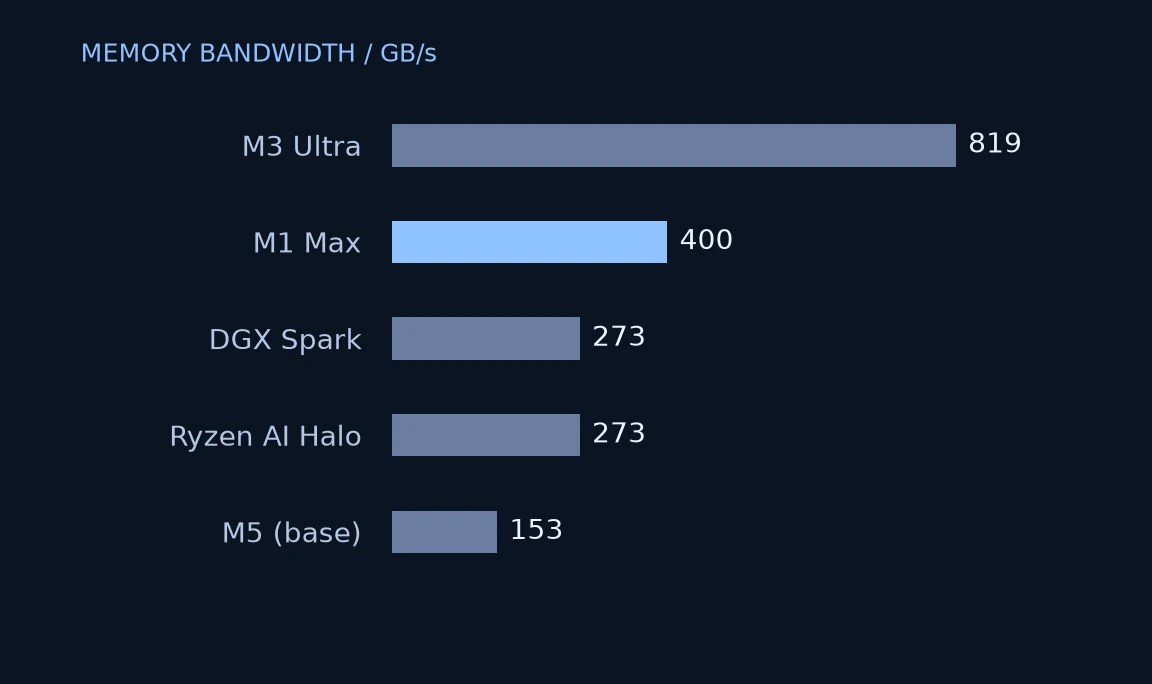
The infrastructure required depends on the workload; some document-processing tasks can run on relatively modest hardware.
In a separate Solaeris AI experiment, we demonstrated how an older Apple Silicon computer could perform local inference workloads for document extraction and retrieval-augmented generation.
For specialized tasks involving document analysis, classification, structured data extraction, internal knowledge retrieval, and certain automated workflows, a smaller private model may deliver the performance a business actually needs.
Using Existing Models for Private AI
Organizations can deploy private AI using existing open-weight models, which can be downloaded and operated on infrastructure they control, subject to the models’ applicable licenses. This gives businesses a starting point without the cost of developing a foundation model from scratch.
A business can then connect an existing model to its own internal information systems.
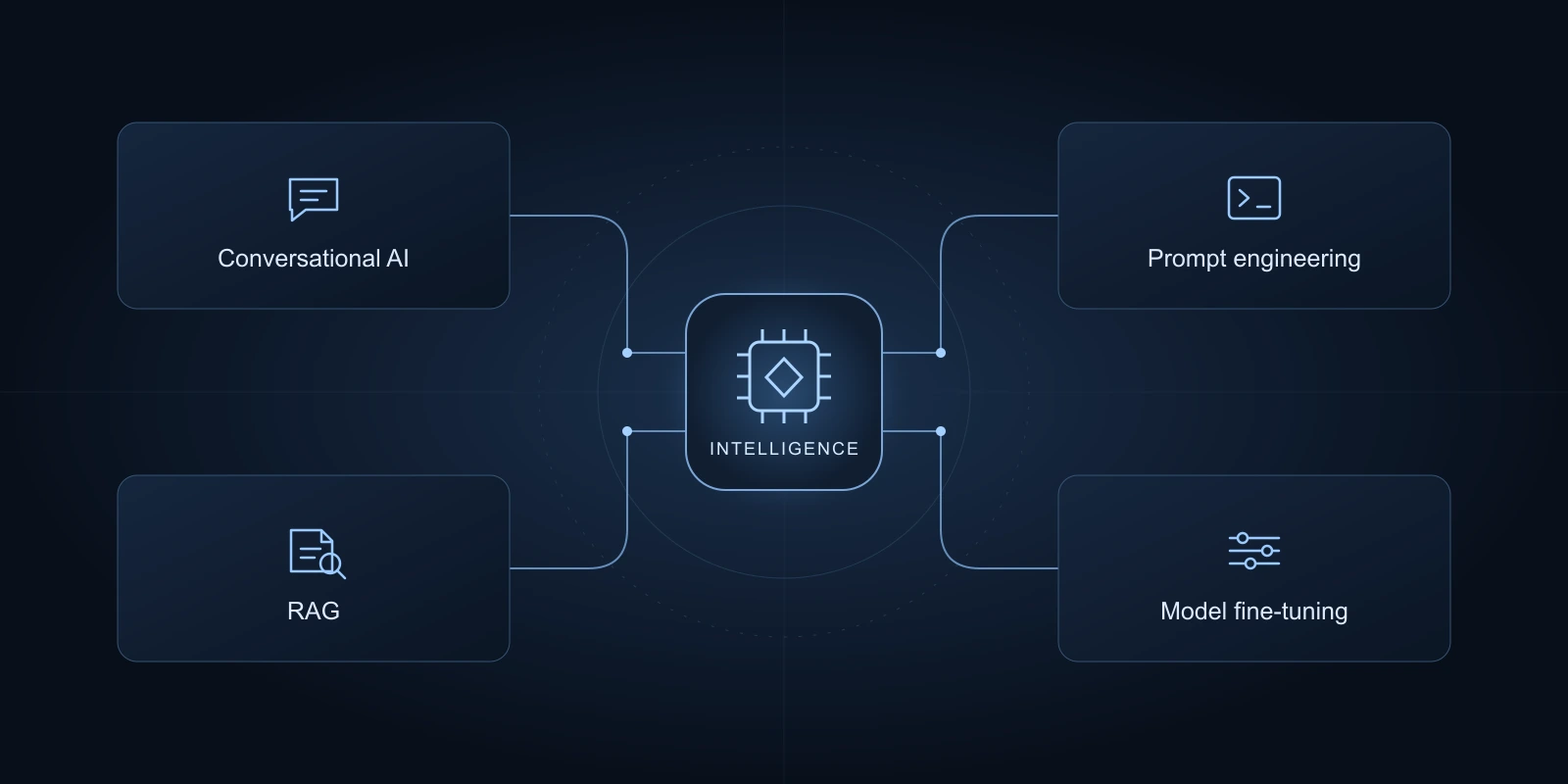
One particularly useful technique is retrieval-augmented generation, or RAG.
Rather than permanently training an organization’s proprietary information into a model’s parameters, a RAG system retrieves relevant information from a controlled knowledge base and supplies it as context when responding to a query.
For example, a law firm could develop a private AI research assistant connected to its internal case files, legal briefs, and historical work product.
A pharmaceutical company could connect an AI assistant to internal research papers, experiment records, and proprietary development documentation.
An engineering company could build an AI-powered knowledge system capable of searching decades of technical specifications, project reports, and design documentation.
In each case, the organization can benefit from modern AI capabilities without necessarily training a proprietary foundation model or transmitting its confidential records to an outside inference provider.
The information remains in an environment where the business can define its own access controls, retention policies, and security requirements.
Data Sovereignty Is Becoming a Competitive Advantage
Data sovereignty involves deciding where information is stored, who can access it, how it is processed, and which third parties are authorized to handle it.
In an AI-driven economy, these questions will become increasingly consequential.
For a defense contractor, sovereignty may involve strict access controls around classified or export-controlled information.
For a healthcare provider, it may involve safeguarding patient records and ensuring that AI systems operate within applicable privacy requirements.
For a technology company, it may mean preventing proprietary algorithms, source code, and product development information from leaving a tightly controlled environment.
For a law firm, it may mean protecting privileged communications, confidential discovery materials, and sensitive client matters.
Private infrastructure does not automatically guarantee security. Organizations must still manage authentication, encryption, access permissions, software vulnerabilities, backups, insider threats, and physical infrastructure.
Nor does on-premises deployment eliminate applicable legal disclosure obligations.
Private infrastructure gives the organization greater architectural independence and direct technical control over certain data boundaries. Its team can configure and enforce those boundaries within the systems it operates.
Choosing the Right AI Architecture
Not every organization needs fully on-premises AI.
In many cases, enterprise frontier AI services or managed cloud infrastructure offer an appropriate combination of security, performance, cost, and ease of operation.
In others, the sensitivity of the information or strategic value of the organization’s intellectual property justifies investing in private infrastructure.
Hybrid architectures can also be effective.
An organization might deploy local AI models for sensitive document analysis while using frontier APIs for general-purpose work that does not involve confidential information.
Choosing among these options requires an evaluation of data sensitivity, regulatory obligations, model performance, total cost of ownership, and operational requirements. That review helps establish which workloads can use hosted services and which need the controls available in a private environment.
How Solaeris AI Can Help
At Solaeris AI, we work with organizations to evaluate, design, and implement AI systems tailored to their operational needs.
We help businesses assess the trade-offs between frontier model APIs, managed cloud deployments, and fully private on-premises AI infrastructure.
Our work includes model evaluation, private inference deployment, document intelligence, retrieval-augmented generation, integration with internal business systems, and the development of custom AI applications.
We evaluate candidate models and architectures against the workload’s requirements, including how the system will handle confidential data. For businesses working with proprietary knowledge or valuable intellectual property, that evaluation may support a private or hybrid deployment with explicit controls over access, storage, and processing.
Contact Solaeris AI to discuss your organization’s AI infrastructure, data sovereignty requirements, and private deployment options.
Sources and further reading
- OpenAI — Business Data Privacy and Security
- Anthropic — Commercial Data Training Policies
- Anthropic — Claude Design Announcement, April 17, 2026
- SEC — Figma Board Resignation Filing, April 14, 2026
- The Information — Anthropic Blindsides Its Business Partners
- The Wall Street Journal — A Backlash Against Anthropic Is Brewing in Silicon Valley
- Amazon Web Services — Amazon Bedrock Data Protection
- U.S. District Court — Bartz v. Anthropic, June 2025 Fair Use Order